
Early Modern Women
Seeing women in the early modern period is complicated by various factors. Image producers were overwhelmingly represented by men, as were the producers of published books and their authors. The male gaze also comprised these works’ target audience. Our data set devoted to early modern women, however, reveals a surprising observation. The following images example overarching trends in how women are featured in early modern book illustrations. Through the concepts of nudity and of strength, women and in some cases their power become potent symbols for values and ideals in the period. While three of them depict royals (symbolized through their crowns), the first two exhibit the woman’s body through her nakedness in ways that a male sovereign would not be represented, an observation that is perhaps less surprising.
From another perspective, in these images the crown becomes the focal point and demonstrates that her body is powerful through her role in society. In the latter images, both women are bearing swords (and the second armor). Early modern codes for indicating women differ from what we might expect in today’s visual culture. For example, the viewer will note that many younger women have slightly rounded bellies; this was a symbol not of pregnancy nor obesity, but rather of fertility.

Hyenach volget der kurcz syn von ettlichen frauen von denen johannes boccacius in latein beschriben hat und doctor heinricus stainhöwel geteütschet -Sorg, Augsburg (1473)

Boccace, des cleres et nobles femmes, traduction français anonyme - Angoulême or Cognac (1488 -1496)

Livre que fist Jehan BOCACE de Certalde des cleres et nobles femmes, lequel il envoia à Audice de Accioroles de Florence, contesse de Haulteville - (1401)

Galeria de mugeres Fuertes, t. I. Las Fuertes Judias - La Oficina de Don Benito Cano, Madrid (1794) (vol. 1-4)
CEMVC Early Modern Women Collection

Livre que fist Jehan BOCACE de Certalde des cleres et nobles femmes, lequel il envoia à Audice de Accioroles de Florence, contesse de Haulteville - (1401)
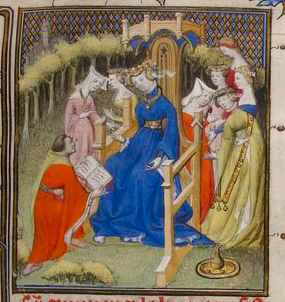
Livre des Femmes Nobles et Renommées - Bouloingne et d’Auvergne, Paris (1403)

Des cleres et nobles femmes, De claris mulieribus - Paris (1410)

Hyenach volget der kurcz syn von ettlichen frauen von denen johannes boccacius in latein beschriben hat und doctor heinricus stainhöwel geteütschet - Sorg, Augsburg (1473)

De Claris Mulieribus - Zainer, Ulm (1473)

Hie nach volget der kurcz sin von etlichen Frowen: von denen johannes boccacius in latin beschriben hat, und doctor hainricus stainhöwel getütschet - Zainer, Rütlingen (1474)

Iohannis Bocacij in librum de claris mulieribus - Van der Heerstraten, Leuven, (1487)

Boccace, des cleres et nobles femmes, traduction français anonyme - Angoulême or Cognac (1488 -1496)

De la louenge et vertu des nobles et cleres dames - Vérard, Paris (1493)

De Las Mujeres Ilustres - Hurus, Zaragoza (1494)

Ioannis Boccatii de Certaldo Insigne Opvs de Claris Mulieribus - Apiarius, Bern (1539)

Ein schöne Cronica oder Hystoribuch von den fürnämlichsten Weybern - Stayner, Augsbery (1543)

Galeria de mugeres Fuertes, t. I. Las Fuertes Judias - La Oficina de Don Benito Cano, Madrid (1794) (vol. 1-4)
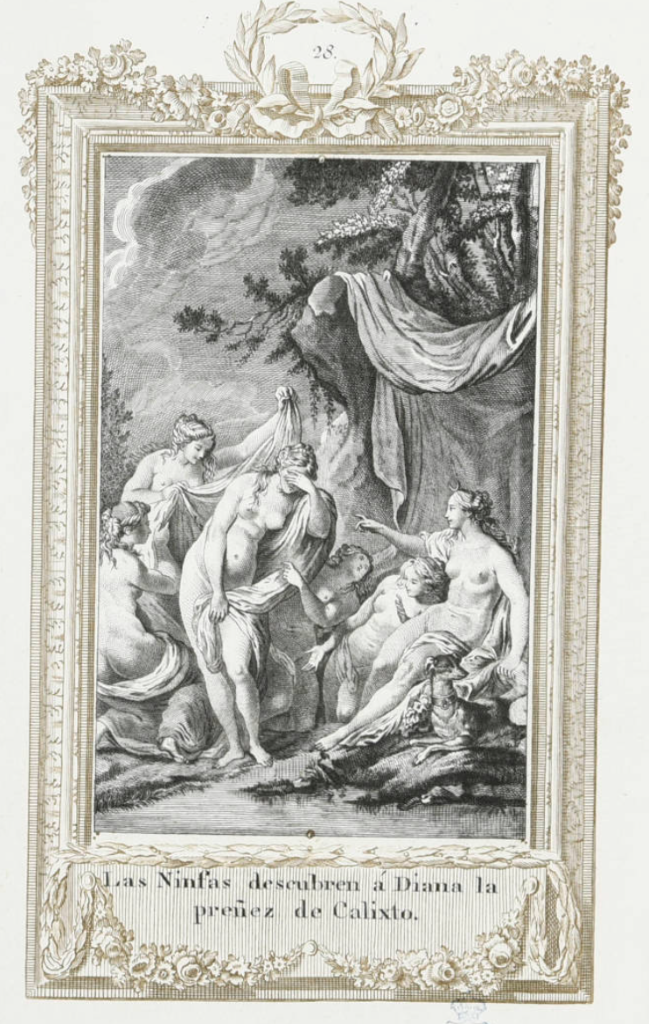
Madrid, Spain, 1800-1850

World Noted Women; or, Types of Womanly Attributes of All Lands and Ages - D. Appleton and Company, New York (1857)

World-Noted Women; or, Types of womanly attributes of all lands and ages - D. Appleton & Company, New York (1858)
Collection PDFs
English
World Noted Women; or, Types of Womanly Attributes of All Lands and Ages - D. Appleton and Company, New York (1857)
French
Livre des Femmes Nobles et Renommées - Bouloingne et d’Auvergne, Paris (1403)
Des cleres et nobles femmes, De claris mulieribus - Paris (1410)
Boccace, des cleres et nobles femmes, traduction français anonyme - Angoulême or Cognac (1488 -1496)
De la louenge et vertu des nobles et cleres dames - Vérard, Paris (1493)
German
Hyenach volget der kurcz syn von ettlichen frauen von denen johannes boccacius in latein beschriben hat und doctor heinricus stainhöwel geteütschet -Sorg, Augsburg (1473)
Ein schöne Cronica oder Hystoribuch von den fürnämlichsten Weybern - Stayner, Augsbery (1543)